
Employment Situation in New India

According to the vision outlined by Prime Minister Modi, India is making significant strides towards achieving a $5 trillion economy by 2024-25. Under his leadership, the economic recovery in the country continues to have a positive impact on employment situation in New India, thanks to the multiplier effect. Furthermore, the Budget for 2023-24 has injected strong momentum into economic growth with a substantial 33% increase in the country’s capital investment, now totaling Rs 10 lakh crores. This boost in capital investment is poised to not only stimulate economic activities but also enhance employment prospects across the nation. The surge in employment opportunities in India is evident through various indicators, including increased job enrollments in the organized sector, a growing number of registered companies, the proliferation of startups, and the emergence of numerous Unicorns in the country. This expansion of employment opportunities extends to new sectors like AI, cloud computing, data analytics, automation, and more. The employment situation in New India is constantly evolving, and the employment situation in 2023 has witnessed significant transformations. Current Employment Situation in India 2023 | Current Employment Situation in India According to the Economic Survey released in January 2023, the Indian economy’s GDP is projected to experience growth in the range of 6% to 6.8% during the fiscal year 2023-24. This projection is based on the evolving economic conditions and global political developments. The Indian economy’s growth is primarily being driven by private consumption, capital formation, and capital investment. This positive momentum has led to increased employment opportunities and a reduction in urban unemployment rates, along with higher registrations in the Employee Provident Fund. Additionally, the Mahatma Gandhi National Rural Employment Guarantee Scheme (MGNREGS) has played a crucial role in providing direct employment in rural areas, while also creating indirect job opportunities for rural households to diversify their income sources. The recent consumer confidence survey conducted by the Reserve Bank of India (RBI) in October 2023 (results of September 2023) reflects improved contemporary and future employment and income conditions. The highlights of the Consumer Confidence Survey are as follows – The employment rate in the country has shown growth during the current fiscal year, as supported by both official and unofficial sources. The Periodic Labour Force Survey (PLFS) indicates an increase from 50.7% in 2017-18 to 60.8% in 2022-23, whereas in urban areas, it increased from 47.6% to 50.4%. The LFPR for males in India increased from 75.8% in 2017-18 to 78.5% in 2022-23, while the corresponding increase in LFPR for females went from 23.3% to 37.0%. Moreover, the Labor Force Participation Rate (LFPR) has improved, indicating a positive trajectory for the Indian economy despite the initial pandemic-induced slowdown in early FY 2023. According to the Overview of the Union Budget for the fiscal year 2023-24, increased investments in infrastructure and enhancing productive capacity have a substantial multiplier effect on both economic growth and employment. Furthermore, the government plans to set up 100 laboratories within engineering institutions to focus on developing applications utilizing 5G services. This initiative aims to tap into a wide array of new opportunities, business models, and, importantly, employment prospects. These laboratories will encompass areas such as smart classrooms, precision farming, intelligent transport systems, and healthcare applications. Significant aspects revealing Employment Situation of the Country: 1. Increase in EPFO Subscription As on October 2023, 498058 total EPFO registration has been done and as on April 2023, the total new subscriber during March 2023 accounted to be 7,57,792, out of which, 5,67,149 were males and 1,90,630 were females. The newly joined members belong from the age of 18-21 years comprising 2,34,720, followed by the 22-25 years age group comprising 1,94,216. In May 2023, 10,08,693 members have rejoined the EPFO membership, showing a significant increase compared to the previous year. These members have commutated their jobs and rejoined the establishments covered under EPFO and opted to transfer their accumulations rather than applying for final settlements. Therefore, extending the scope of social security protection. 2. QES Indicates the Surge in Employment A “quarterly bulletin” refers to a periodic publication or report issued by an organization, such as a government agency, central bank, or a company, that provides information, analysis, and estimates about various economic, financial, or other relevant indicators for a specific quarter or three-month period. The term “estimates” in the context of a quarterly bulletin typically pertains to projections, forecasts, or assessments made by the organization regarding trends, statistics, or other data for the upcoming quarter or future periods. These estimates can include economic growth forecasts, inflation predictions, employment figures, trade balances, and more, which are essential for stakeholders, policymakers, and the public to understand and make informed decisions. The current Quarterly Bulletin (published by National Sample Survey Office) is the 18th in the series for the quarter January–June 2023. The significant finding of the QES is – Survey period Male Female Person (1) (2) (3) (4) April – June 2022 73.5 20.9 47.5 July – September 2022 73.4 21.7 47.9 October – December 2022 73.3 22.3 48.2 January – March 2023 73.5 22.7 48.5 April – June 2023 73.5 23.2 48.8 Source: National Sample Survey Office Key Findings of PLFS, Quarterly Bulletin (April –June2023) – The “Labor Force Participation Rate,” often referred to as the “Worker Population Ratio,” is a statistical measure that calculates the percentage of the working-age population (typically those aged 16 to 64 or 15 to 64, depending on the country’s definition) that is either employed or actively seeking employment. It is used to assess the proportion of people within a specific age group who are engaged in the labor force, which includes those who have jobs or are actively looking for work. This ratio is a key indicator in labor market analysis and provides insights into the economic participation of a particular demographic group within a given region or country. WPR (in percent) in CWS in urban areas for persons of age 15 years and above – Survey period Male Female Person (1) (2) (3) (4) April –
India GDP in Trillion: A Path to Become a $30 Trillion Economy
The bold and big thinking of Indian leaders is pushing India to become a $30 trillion economy in the next 30 years. In a short span of a year, the Indian economy has quickly expanded, from the timely action of the RBI to tame inflation to expanding consumption – India is skyrocketing towards growth and development. Recently, India has emerged as one of the most powerful countries, since it surpassed the UK to become the 5th largest world economy. However, a question is still being asked whether India can put itself forward as a $30 trillion economy. Certainly, India holds the potential to become a $30 trillion economy which is clear from the fact that the nominal GDP (GDP at the current rate) has taken a big swing in the April-June quarter, i.e., Rs 64.95 lakh crores, according to the June rupee-dollar exchange rate it stands at $823 billion. Moreover, it is also claimed that India surpassed the UK’s GDP in March itself, which was $813 billion, while India GDP was $864 billion. However, as per 2021 April’s GDP outlook report of the International Monetary Fund (IMF), India’s GDP ($3.18 trillion) was right behind UK’s GDP ($3.19 trillion) in 2021. Conversely, it has also been anticipated that India would become a $3.54 trillion economy by the end of 2022 if compared to the UK’s projected GDP which would be $3.38 trillion. From the estimated data and India GDP growth, it can be seamlessly prognosticated that India will soon become a $3.54 trillion economy by the end of 2022 considering its present growth. Although, in which year it can become a $30 trillion economy will depend on many factors. With that, let’s see some facts, how the India GDP surpassed the GDP of the UK? How India GDP Growth Has Surpassed the UK The timing could not have been more auspicious when India emerged as the 5th largest world economy at midnight after the entire country celebrated Azadi ka Amrit Mahotsav, that’s its 75th Independence day. Moreover, after overtaking the UK, India is all set to skyrocket to be the third-largest world economy by 2029. The path taken by India since 2014 reveals it is likely to get the tag of the third largest economy in 2029, a movement of seven places upward since 2014 when India was ranked 10th. India should surpass Germany in 2027 and Japan by 2029 at the current rate of growth (as per estimated figures). From the estimated data, it can be safely projected that India has been moving in the right direction, and we can conclude that India GDP rank will surpass the world economic leaders in the coming years. How India pipped the UK, our colonial rulers – Yet, with the commendable achievement of India, one aspect which can not be ignored is, that “the per capita income of India is low, as India ranked 144 positions out of 190 countries.” It indicates a clear picture of poverty, income disparity, and our inability to account for inflation, wealth, or saving, therefore, even after achieving the milestone of being recognized as the “world’s fifth largest economy” the Indian economy is lagging behind in distinct aspects. Whether India Will Be Able to Transform Itself Into a $30 Trillion Economy or Not | India GDP Growth India GDP growth in the last 10 years, reflects a meritorious change, as it jumps to 8.9% in 2021 from 5.5% in 2012, especially after sinking as low as -6.6% in the previous year. With the magnificent elevation in GDP of India, it can unequivocally be noticed that we are perfectly poised on the passageway to aspire to be a $30 trillion economy in the next 30 years. Though, it seems like a far-fetched dream, yet, beyond doubt it’s not rocket science as with our magical power of demographic dividend, youth power, and power of democracy – India can proudly establish itself as a $30 trillion economy. Although, India encounters varied stumbling blocks to be finally crowned as a $30 trillion economy, such as – The Economic Issues in India 1. Low Per Capita Income Even after 75 years of Independence, India continues to be a developing country, whose one feature is low per capita income. However, in 2020-21 low per capita income has dropped to Rs 1.27 lakh from Rs 1.32 lakh in 2019-20, while in 2021-22 it is estimated to be 1.50 lakh. Apart from this, the problem of unequal distribution of income exists in India, which is one of the significant contributors and obstacles to economic development. Proposed solution – 2. Dependence on Agriculture Over 54.6% of the population is dependent on agriculture to earn a livelihood, which only contributes 20.2% to the national income, reflecting low productivity. Fortunately, in the Union Budget 2022-23, Rs 1.24 lakh crores have been allocated to the Department of Agriculture, Cooperation, and Farmers’ Welfare. The measures are taken by the government, such as financial and the introduction of policies, positively solve the problem of individuals working in the agriculture sector. Proposed solution – 3. High Population Another factor, which is the stumbling block in economic development is heavy population pressure. Contemporary, India is the second most populous country, after China, yet, the per capita income of our country is low, which results in income disparity, and the inability to account for inflation, wealth, or saving. Further, in order to take care of the well-being of the population of the country, the government has to allocate high funds to fulfill basic requirements like food, shelter, medicine, schooling, electricity, hygiene, and more. Proposed solution – 4. Existence of Under-employment And Chronic Unemployment Unemployment of any kind is a curse of any economy, be it developed or developing, and being a developing country, India is also encountering similar problems. Therefore, due to the abundance of labor, it is challenging for the government to generate employment opportunities for the entire population. In addition to that, due to a deficiency of capital, secondary and tertiary occupations
Contribution of Artificial Intelligence in Financial Services To Boost Economy of New India

Has a chatbox ever asked you to open a savings account? Does ever a computerized assistant resolve your queries in minutes? In this blog, we will understand how Artificial Intelligence drives Indian economy. The world of AI is tremendously booming and it can be seamlessly seen that no industry or sector has remained untouched by its prevalence. And the world of finance and banking is also among those worlds which are also anchoring the power of kick-fast change in AI. AI is intelligence demonstrated through machines, as opposed to natural intelligence present in humans and animals. It contains streamlined programs and procedures, including its ability to perform automated routine tasks, improve customer service, and assist businesses in achieving success, not only in the financial sector, but also in other sectors such as telecommunications, manufacturing, and more. Therefore, taking the economy on the path of automation. Undoubtedly, Artificial Intelligence has been evolving in India since 1950s, from the neonatal stage, when the idea of AI culture had coined to a complete boom state, where AI was intensively being used to store large data, VRs, ARs, and IoTs – India is taking every possible initiative to embed AI in every nook and corner of society. India’s National Strategy for AI has been prepared by NITI Ayog (a premier policy think tank of the Indian Government through providing directional and policy inputs) to harness the power of AI in distinct fields. AI’s practical and effort approach can adequately address societal needs in distinct aspects of healthcare, agriculture, education, smart cities, infrastructure, smart mobility and transportation. With the advent of the 21st century, due to its incredible advances in data processing, collection, and computation power, electronics has become ubiquitous in almost every sector, be it the manufacturing or the service sector. Further, AI is now deployed in distinct tasks and decision-making to allow better connectivity and productivity. Basic Pillars Which Contribute To The Development of AI Talent Talent is the strongest pipeline for India to be successful and no doubt, India does have the resources for the same. Since India has the largest youth population in the world (around 66% of the population), and with the Indian government’s emphasis on continual training of a high-skilled workforce, India can soon become an AI hub. Moreover, India produces twice as many master-level engineering graduates as the United States, which provides it a competitive edge over other countries. And India is moving in the right direction through the introduction of initiatives like AI for Youth (commenced in 2020) to make the youth ready for future AI developments. Taking this initiative forward, “Responsible AI For Youth 2022” was created by the National E-governance Division, Ministry of Electronics and Information Technology, Government of India in collaboration with Intel. It is launched by the Ministry of Electronics and IT. Research India has the largest AI research community in the world and since 2010, it stands 4th in the largest producer of AI-relevant scholarly papers. It provides an edge to India’s youth population to increase their outreach, especially with their counterparts in the United States. A two-tier integrated approach is introduced to magnify the core and applied research in AI – Centers of Research Excellence in Artificial Intelligence (CORES), it will emphasize on the core research of AI. International Center for Transformational Artificial Intelligence (ICTAI), this tier will help in establishing an ecosystem for the application based technological development and deployment. Patents Since 2012, India ranks in the 10th position in the top 10 AI patent-producing countries, due to the immense increase in AI-driven inventions. Moreover, personal devices and computing, business, telecommunications, including life science are the four largest categories for AI patents in India. Collectively, these are associated with over 70% of India’s AI patents and reflect that Indian innovators have emphasized on applying AI to traditional strengths. In the past two decades, India has come a long way in AI patenting, since, the benefit of using patents to protect their devices is reflected. AI Companies and Investments More than 50% of Indian companies applying AI to their products are active in business analytics, medicine, finance, sales, retail, and customer relations. NASSCOM has predicted that by FY 2026, industrial and automotive, healthcare, retail and CPG and BFSI will contribute 60% of possible AI-driven value to India. Moreover, AI companies and investments are continually bouncing back, considering that private companies’ investment in India has witnessed steady growth from 2015 to 2019. Cloud Computing India is using market cloud computing as a proxy for AI chips to support its AI computing needs since it does not have the domestic manufacturing capacity to manufacture AI chips. Also, India is lagging behind in cloud computing, yet contemporary, cloud bared markets are growing because of the rising demand for computing power. Be it talent, research, patents, investment in AI, or cloud computing – India has been moving in the right direction utilizing its population strength by introducing varied initiatives to promote AI in distinct fields. In addition to that, the government has introduced “AIRAWAT” (AI Research, Analytics, And Knowledge Assimilation Platform) which is a cloud platform for big data analytics and assimilation, with the power-optimized AI computing infrastructure using advanced AI processing. Apart from that, the Indian government has been investing in other schemes such as Digital India with the purpose to boost AI, IoT, big data, and robotics, including providing subsidies to startups under “Start-up India.” From the given information, we can easily understand that the Indian government has been working on all aspects to make AI a reality in India, from establishing institutes to providing cloud support and AI research. This in return, is contributing to business growth through financial inclusions since, due to the development of AI in the financial services and sector, students can easily access the loan facility for education, training, or even to establish their business. How AI is Helping The Financial Services | Contribution of AI in Financial Services To Boost Indian Economy | AI in
Master Circular On Bank Finance To Non-Banking Financial Companies (NBFCs)
This Master Circular consolidates instructions on the above matter issued up to January 04, 2022 by which more autonomy have been given to NBFCs registered with RBI
PM’s Deliberations On Easy Lending Norms By Commercial Banks To Fulfil The Requirements Of Needy Enterprises
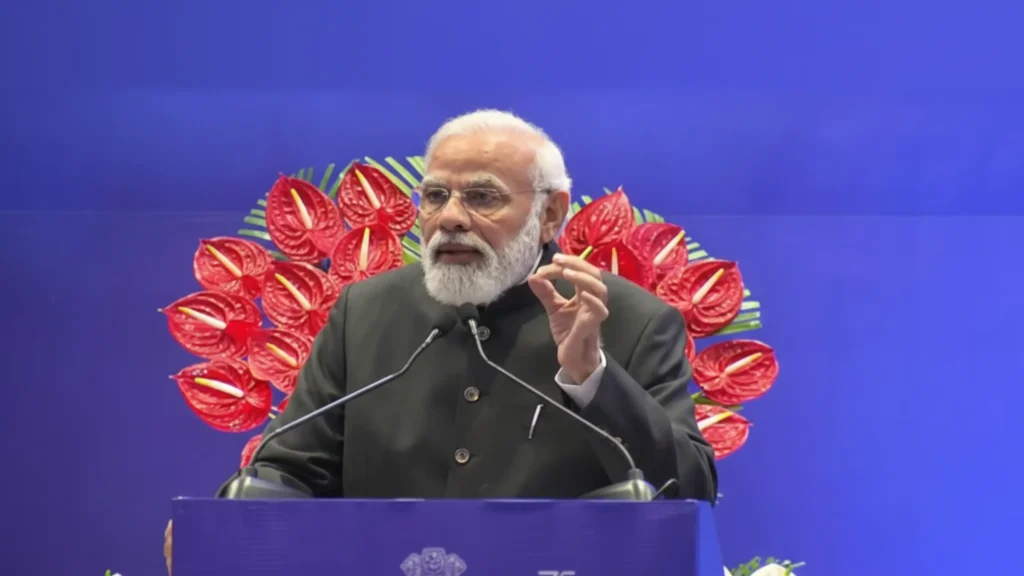
During speech at the conference on 18th November, 2021 on ‘Creating synergies for seamless credit flow and economic growth’, our Prime Minister said “Indian banks are strong enough to play a major role in imparting fresh energy to the country’s economy, for giving a big push and making India self-reliant. I consider this phase as a major milestone in the banking sector of India”. On this great occasion I wish to congratulate the Hon’ble Prime Minister on behalf of the industry, for suggesting various measures to commercial banks for easing out loan delivery process for providing better opportunities to business enterprises and start-ups. Our country’s outlook is now to intensify and spread the economic activities by providing hassle free loans to entrepreneurs. In the post Covid scenario, RBI’s role has to play an important role for boosting up economic activities and encouraging the banks to sanction loans at easy terms. Prime Minister reiterated that banks have sufficient liquidity and coupled with the fact that now there is no backlog for provisioning of NPAs as NPAs in public sector banks are at the lowest compared to the five years back and this has led to upgrading of outlook for the Indian Banks by the International agencies. The Prime Minister said apart from being a milestone, this phase is also a new starting point and called upon the banking sector to support the wealth creators and job creators. The Prime Minister empathetically said “It is the need of the hour for the banks of India to work proactively to bolster the wealth sheet of the country along with their balance sheets”. PM urged bankers to identify the productive potential of citizens and go beyond the traditional banking when it comes to nourish their business intelligence and entrepreneurial dreams with quick release of loan funds. PM further stressed upon the need to do away with the feeling that lender is approver and customer is an applicant or receiver. Instead of waiting for the customers to come and seek loans, bankers have to come forward to analyse the credit appetite of both existing and potential customers and provide consultancy services with customized solutions and unified policies. In this way, banks have to adopt the model of partnership in which both partners share the benefits. The Prime Minister said that due to recent implementation of various schemes, a huge pool of data is now available in the country. The Prime Minister emphasized that the banking sector must take advantage of this facility. He also listed the opportunities presented by the flagship schemes like PM Awas Yojana, Svamitva and Svanidhi and asked banks to participate and play their proactive role in these schemes. Prime Minister said the scale at which corporates and startups are coming forward today is unprecedented and it is the opportune time to strengthen, fund, invest in India’s economic aspirations. Reduction In NPA He quoted detailed reports while saying that NPA ratio of public sector banks has now come down to the lowest during last 5 years and they are flushed with liquidity. PM quoted that public sector banks have recovered around 5 lakh crores of bad loans during last years but such news did not make headlines in core media due to illegitimate activities of some defaulters. Need For Massive Credit Push Inspite of the current Covid situation, it is assumed that economy will recover at growth rate of 8.7% to 10.5% during current fiscal. This study sounds good but a massive credit push is essential for businesses to remain operational without hindrance and to expand to new horizons. Studies have also found that growth rate of non-food bank credit has increased to 6.8% in September, 2021 as compared to 5.1% during same period last year. Industrial loans however have seen the growth of only 2.5%. CARE ratings also hint that weekly average (net) liquidity surplus in banking system grew from Rs.4.5 lakh crores at the end of June, 2021 to around Rs.7.5 lakh crores as of September-end. Time For Action To Contribute to Economy Bank’s participation in the growth of nation’s economy is undeniable. Banks maintain strict protocols while sanctioning loans. This exercise makes entrepreneurs to wait for long period and delay the process for unwanted reasons. Bankers must overlook traditional methods to approve loans. PM assures the banks with dependable words and announced to provide all possible help. It is however important for loan seekers to maintain all records and provide all necessary documents for faster disbursal of loan funds. Make Loan Dispensation Process Easy And Time Bound He also appreciated the proposal to set up the web-based project funding tracker. This proposal will make all ministries and banks to work in tandem. PM also suggested adding this proposal as an interface to Gati Shakti Portal. Faster loan disbursal process will also help to effectively cope with other big challenges of unemployment and fund crunch. Access https://www.rbi.org.in/ to read more information. Conclusion In view of the abovementioned facts, it may be safe to conclude that the Government is fully committed to support Indian economy by promoting businesses and providing easy availability of funds through banks. It becomes pertinent for banks to be proactive in considering genuine loan requests and make sure that the funds sanctioned are being used only for the said purpose. Misuse of bank funds may land customer and/or concerned authorities into trouble and may attract various penal actions. In order to find more details on the given subject, you may refer to the author at https://www.sunilkumargupta.com.
Working of NBFCs in India Would Improve With Implementation of PCA Framework by RBI
The objective of the PCA Framework is to enable Supervisory intervention at appropriate time and is intended to act as a tool for effective market discipline.
“AtmaNirbhar Bharat” Measures: Rs. 20 lakh crores Economic Package 2020
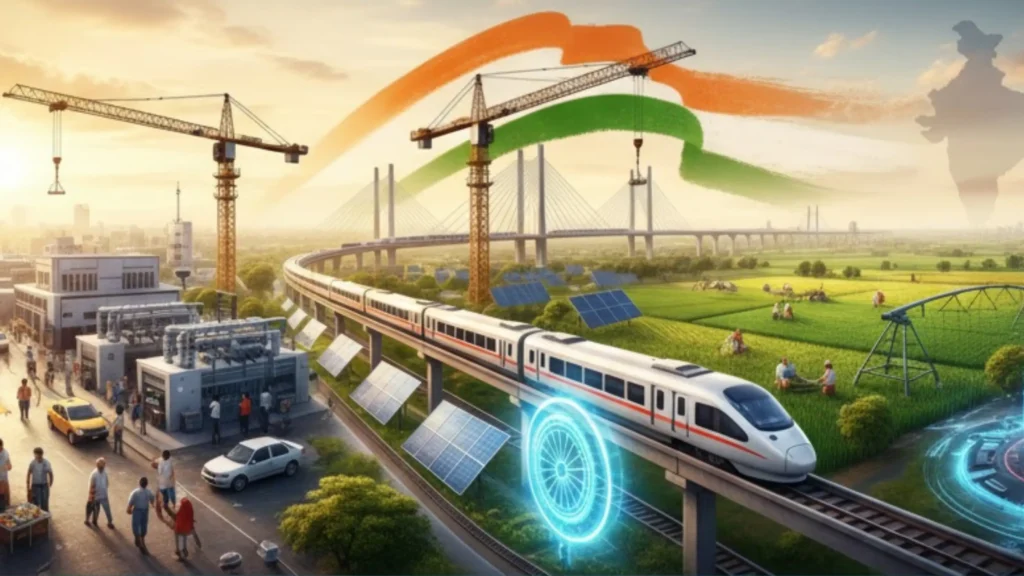
The Indian Government has always been reviewing its policies in the best interest of the country. The focus should now be drawn on improving India’s performance in ease of doing business by reviewing and rationalizing its policies in…
Better Opportunities for New India post COVID 19 : The World Manufacturing Hub
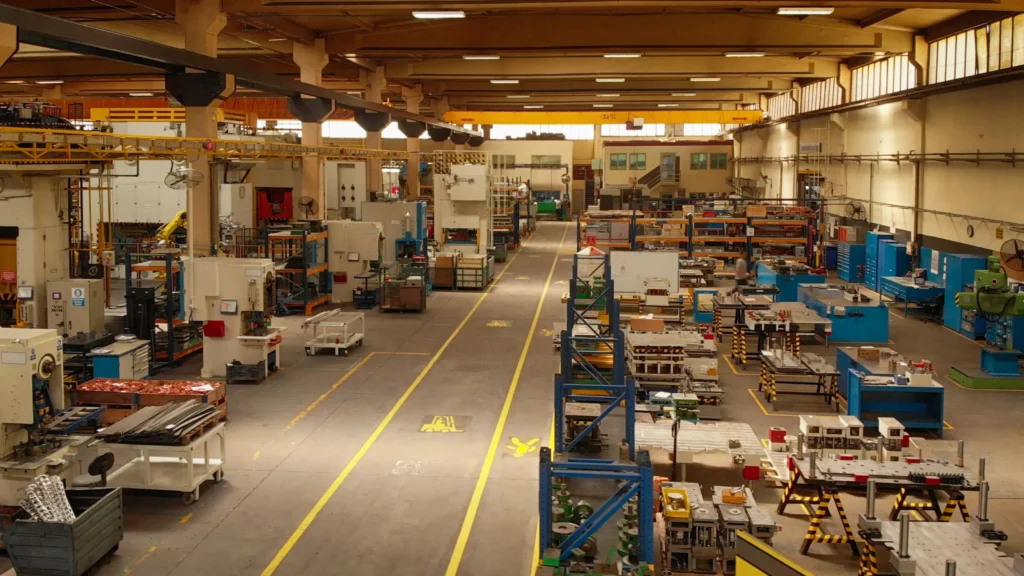
Various companies are planning to shift its manufacturing units from China to India, Vietnam, Thailand, Indonesia, Eastern Europe etc. India is being seen as a viable option to become a global manufacturing destination going forward.
Fresh Start Scheme, 2020 & LLP Settlement Scheme, 2020

e Government of India has announced a one-time relaxation to law abiding Companies and LLPs so as to enable them to complete their pending compliances without payment of any additional filing fees
COVID-19 – Few tips to master ‘Work From Home’

With the outbreak of the COVID-19 and the subsequent nationwide lockdown, life is operational in a more or less standstill mode now. Government took strict steps to combat the spread of the deadly virus and ordered to close schools, malls, cinema halls and later on all offices except some of the offices providing essential services to the society.