
India–UK Free Trade Pact: A Defining Arc in Global Trade Realignment

In the constantly changing architecture of international trade, few initiatives capture the essence of recalibration, resilience and renewed cooperation as deeply as the newly signed India–UK Free Trade Agreement (FTA). At a time when geopolitical fractures and protectionist tendencies are reshaping multilateralism, this historic accord between Asia’s fastest-growing large economy and Europe’s most globally integrated financial centre comes not just as a transactional text but as a visionary one. Signed into effect on July 24, 2025, after years of careful negotiation, the India–UK FTA, officially known as the Comprehensive Economic and Trade Agreement (CETA), marks a new era in bilateralism, innovation-driven partnerships and shared prosperity. The Deal That Redefined Diplomacy Historically, India-UK trade has been burdened with complicated legacies. This agreement turns that narrative around: from the post-colonial burden to one of mature strategic partnership founded upon parity and aspirational ambition. Bilateral trade between India and the UK, valued at approximately USD 56 billion in FY 2023–24, is projected to reach USD 120 billion by 2030 under the FTA roadmap. Whereas international news tends to pursue the sheen of billion-dollar numbers, the strength of this agreement is in its detail. The 99% duty-free trade for Indian exports to the UK is not a rhetorical touch—it is a fine-tuned portal for industries that are both labour-intensive and innovation-led. India’s Homegrown Sectors on the Global Stage From the delicate embroidery of Jaipur to the advanced auto parts of Pune, Indian industries—especially MSMEs—will gain immeasurably. The FTA eliminates tariff barriers on goods such as textiles, garments, leather products, gems and jewellery, marine exports, organic chemicals, and sports goods. The gems and jewellery industry, for instance, which exports in the millions to the UK, now expects to grow rapidly under zero-duty access. That’s not wishful thinking—it’s policy arithmetic. Similarly, Indian textile exports, particularly from clusters such as Tiruppur and Ludhiana, are likely to expand, stimulating not merely export volumes but also employment within the country, particularly among women-owned firms and rural agglomerations. Then there is the chemical and agro-processing sector—verticals that have traditionally borne the brunt of low-margin exports because of high tariffs. With those barriers now largely removed, doubling from these verticals of outbound trade is not only possible but probable. Tapping into the UK’s Diverse Potential From the British point of view, this deal brings a direct gateway to the world’s most populous democracy and fifth-largest economy—one with a demographically young market, rising middle class, and booming demand for premium and value-added products. The UK will have significantly lower tariffs on reputation-building exports like Scotch whisky, gin, luxury cars (will be gradually lowered), processed foods, pharmaceuticals and machinery. In addition, this access is not limited to products; it also applies to services, intellectual property rights and a more flexible investment environment. Practically, for those British companies that have been wanting to de-risk from the excessive dependence on traditional European supply chains in the Brexit era, India presents an alternative today—robust, reform-oriented and digitally empowered. Beyond Tariffs: Structure, Sovereignty and Mobility Whereas the headlines highlight trading volumes, the real revolution in this agreement is structural provisions. The Social Security Coordination Protocol, for example, avoids double contributions to social security on posted workers—a matter of vital concern to both Indian IT workers and UK service providers working cross-border. Subsequently, there is Geographical Indication (GI) protection, where regional products—Darjeeling tea, Banarasi silk, Scotch whisky and Stilton cheese are protected. This helps ensure that economic cooperation maintains respect for cultural sovereignty and artisanal heritage—an under-explored but critical aspect of ethical trade. Relaxation of customs processes, regulatory coordination and digital trade harmonisation are the quiet architecture of this pact—less sparkly maybe, but unequivocally the bedrock for contemporary commerce. These will reduce turnaround times at the port, harmonise certification standards and link logistics platforms, particularly for small-scale exporters hitherto slowed down by red tape. Momentum That Transcends Borders Geopolitically, the FTA arrives at a moment of world inflexion. As the WTO limps with fragmented consensus and regional blocks such as the RCEP and CPTPP reshape the map of trade, bilateral agreements such as this one provide flexibility and harmonisation without the bulk of large multilateral architectures. For India, it is a strategic foothold in the West—a complementary curve for its Act East policy. For the UK, it is its most audacious post-Brexit free trade agreement to date, one that delivers market access but also narrative clout: the power to claim a role in the Indo-Pacific century. In particular, the FTA has also included chapters on sustainability, labor practices and e-commerce trade norms—with economic benefits not divorced from social responsibility. Jobs, Growth and the Invisible Multipliers Even as projections suggest the agreement could add USD 34 billion to two-way trade each year by 2040, the actual tale is one of multipliers. Export booms don’t merely inflate balance sheets—they spur domestic industry, generate rural employment, enable artisans and support state-level economies. In addition, industries such as auto parts, pharma and electronics that work on global value chains will now experience deeper integration into UK and EU systems, providing Indian companies with credibility to grow faster and innovate more deeply. Equally, British investors can now access India’s enormous startup ecosystem, agri-tech, climate innovation and infrastructure development—all with a degree of regulatory certainty that this agreement provides. What the Numbers Don’t Show Trade deals are usually understood through GDP boosts and tariff graphs. The India–UK FTA carries not just economic weight but emotional resonance: it marks two mature democracies choosing engagement over coercion and collaboration over competition. It affirms that economic sovereignty need not be a zero-sum pursuit but can rest on the pillars of interdependence, trust and shared prosperity. It reflects an evolved diplomacy-one that goes beyond signing ceremonies to touch upon migration, education, intellectual property, and digital ecosystems. Trade is no longer just about goods on ships; it is about ideas, services, people and the soft power of collaboration. Conclusion: From Symbol to Substance India–UK FTA is more than a policy paper; it is a strategic canvas. It demonstrates the
India Now: A Secure, Self-Reliant, and Sovereign Power on the Rise

India, a civilisation rooted in peace and diplomacy, has long upheld the principle of “Ahimsa”—never initiating aggression, even in the face of grave provocation. Despite being a nuclear power and one of the world’s largest standing armies, India has never attacked another nation first. Yet, it has consistently borne the brunt of cross-border terrorism, especially from its hostile neighbours. The cowardly terror attack in Pahalgam marked a painful continuation of this pattern. But what followed—Operation Sindoor—was not just a military retaliation. It was a watershed moment in India’s strategic doctrine. For the first time in recent history, India responded not only with precision strikes but with a calibrated assertion of its sovereignty, technological prowess, and economic confidence. This operation did more than neutralise terror—it signaled the rise of a new India. One that is done absorbing the cost of restraint. One that is ready to lead with indigenous strength, economic self-reliance, and strategic clarity. Operation Sindoor: A Turning Point in India’s Counter-Terror Strategy Operation Sindoor, launched on May 7, 2025, was a significant military response by India to the Pahalgam terror attack that occurred on April 22, resulting in the deaths of 26 civilians. The operation targeted terrorist infrastructure in Pakistan and Pakistan-occupied Jammu and Kashmir (PoJK). The operation was a coordinated effort involving the Indian Army, Navy, and Air Force, showcasing joint operational capability. Moreover, ISRO’s satellite infrastructure played a crucial role in surveillance and intelligence gathering, enhancing the precision of the strikes. India conducted missile and air strikes targeting nine sites across Pakistan-occupied Jammu and Kashmir and Pakistan’s Punjab province. The attacks were carried out using Rafale aircraft equipped with SCALP missiles and AASM Hammer glide bombs, as well as BrahMos cruise missiles and SkyStriker loitering munitions. “Through Operation Sindoor, India has used its ‘Right to Respond’ to the attack on its soil, and the Armed Forces scripted history by acting with precision, precaution & compassion to destroy the camps used to train terrorists in Pakistan and PoK. As per the plan, the targets were destroyed and no civilian population was harmed. The whole world has witnessed what our Armed Forces have done. The action was carried out very thoughtfully and in a measured manner. It was limited only to the camps and other infrastructure used for training terrorists with the aim of breaking their morale.” as stated by– Raksha Mantri Shri Rajnath Singh in the evening of 7th May, 2025. The Indian Armed Forces, in coordination with the Research and Analysis Wing (RAW), National Security Guard (NSG), and Defence Intelligence Agency (DIA), executed a swift and highly targeted military offensive. Strikes were conducted across nine (9) sites. Over 100 terrorists were confirmed eliminated, including several high-value targets from outfits such as Jaish-e-Mohammed (JeM) and Lashkar-e-Taiba (LeT). What differentiated Operation Sindoor from previous counter-offensives was the unprecedented use of next-generation warfare technology. AI-driven real-time surveillance systems scanned movement across the LoC, while satellite-guided drone squadrons—equipped with precision missile systems—carried out pin-point strikes on high-value targets. The Indian Army’s newly formed Integrated Battle Groups (IBGs) utilised geospatial intelligence and thermal signature analytics to target and eliminate terrorist hideouts with surgical accuracy. Significantly, the operation recorded less than 1% collateral damage, with zero reported civilian deaths—a first in cross-border operations of such magnitude. This reflected India’s strict adherence to international humanitarian law and its commitment to ethical warfare. India also deployed Signal Intelligence Units and cyber-warfare specialists to intercept communication networks and disable terror funding routes. India Retaliates: Multi-Dimensional Warfare India’s retaliation was not merely confined to a military strike; it was a multi-dimensional retaliation. Economic sanctions, cancellation of bilateral events, diplomatic isolation of Pakistan at international forums, and blocking of trade routes were activated almost simultaneously. This level of preparedness and coordination showed a renewed national resolve. Unlike previous incidents, India’s response wasn’t limited to the battlefield. The government initiated a multi-pronged retaliation: Economic Sanctions: Indian businesses were instructed to cut trade ties with Pakistan-based firms. Diplomatic Blockade: India led efforts to further isolate Pakistan at the UN, G20, and BRICS forums. Cultural Boycotts: Sporting and entertainment exchanges were suspended indefinitely. Technology Embargoes: Export of software and cybersecurity products to Pakistan was banned. This strategy reflected a mature economic understanding—that wars today are not just fought with guns, but with rupees, reputations, and algorithms. Strategic Wins Beyond the Battlefield While the warzone operations were critical, the real strength of India’s response lay in its strategic deterrence. Cyber surveillance, border fencing, and a seamless intelligence-sharing mechanism among domestic and international agencies ensured a zero-tolerance stance. The Defence Cyber Agency and National Technical Research Organisation (NTRO) played pivotal roles in digital warfare and misinformation control. Victory was not just territorial but technological and strategic. India’s NTRO (National Technical Research Organisation), in collaboration with the Defence Cyber Agency, successfully thwarted over 300 planned cyberattacks on financial and defence systems. Border Fencing with laser sensors reduced infiltration. Satellite Monitoring of LoC hotspots helped identify cross-border tunnels. Deepfakes and misinformation control units were deployed to stabilise national sentiment during the operation. The results were revolutionary—zero economic shutdown, zero disruption in financial markets, and a surge in global investor confidence. India-Pakistan Treaties: From Dialogue to Disengagement In the aftermath of Operation Sindoor, diplomatic relations with Pakistan plunged to historic lows. India and Pakistan have signed several bilateral agreements aimed at fostering peace and managing conflict. Prominent among them is the Simla Agreement (1972), which emphasised peaceful resolution of disputes through dialogue and bilateral negotiations. The Lahore Declaration (1999) further committed both nations to confidence-building measures, including nuclear risk reduction. The Indus Waters Treaty (1960)—a World Bank-brokered agreement—remains one of the few functioning treaties, allowing equitable water sharing of the Indus River system. The Indian government suspended all bilateral talks, and global powers supported India’s stance on cross-border terrorism. Pakistan faced global scrutiny, including from the Financial Action Task Force (FATF). However, post-2016 and more significantly after Operation Sindoor in 2025, many cooperative frameworks have collapsed. Backchannel diplomacy, cultural exchanges, and bilateral cricket ties have
Indian Railways 2.0 – Diversifying Investment in Indian Railway Ecosystems

India’s growth story is intricately linked to the development of its infrastructure, with transportation playing a pivotal role in driving economic progress. As the world’s fastest-growing major economy, India is poised to see its GDP soar, and a robust, efficient transportation network is essential to sustaining this momentum. As the backbone of India’s transportation system, Indian Railways plays a vital role in connecting the country, facilitating trade, and driving economic growth. However, in an era of rapidly changing market dynamics, railways need to diversify their revenue streams beyond traditional fare and freight incomes. The Government of India, through the National Rail Plan (NRP) for 2030, envisions a future-ready railway system that will significantly enhance operational capacity, sustainability, and efficiency. This plan aims to increase the modal share of railways in freight to 45% by 2030, ensuring that the rail network is prepared for future demand up to 2050. Financial Performance of Indian Railways: Current Figures Indian Railways continues to be a vital component of India’s transportation infrastructure, demonstrating growth in both passenger and freight sectors. In the fiscal year 2024-25, internal revenues are estimated at ₹2,78,500 crore, marking an 8% increase over the previous year’s revised estimates. Traffic revenue contributes ₹2,78,100 crore, with 65% from freight services (₹1,80,000 crore) and 29% from passenger services (₹80,000 crore). The remaining 6% of the total traffic revenue (which amounts to ₹16,400 crore) can be attributed to various other revenue sources for Indian Railways. These include station and catering services, advertising rights, and other incidental services. Looking ahead, Indian Railways projects revenues exceeding ₹3 lakh crore in the fiscal year 2025-26, an approximate 8% rise from 2024-25. Passenger revenue is expected to grow by 16% to ₹92,800 crore, while freight revenue anticipates a 4.4% increase to ₹1,88,000 crore. From April to December 2024, Indian Railways generated ₹1,93,000 crore in revenue, a 4% year-on-year growth. This includes ₹1,26,000 crore from freight and ₹55,988 crore from passenger services. Capital expenditure for the same period was ₹1,92,000 crore, reflecting a 2% increase over the previous year. Government’s Vision for the Future of Indian Railways With a clear focus on enhancing operational capacities and leveraging commercial policy initiatives, the plan aims to drive growth, improve service delivery, and increase the role of railways in India’s economic development. Key Government Vision Points: The government aims to increase railways’ freight share to 45% by 2030 through strategic operational improvements and commercial policies. A target to increase freight train speeds to 60-70 km/h to significantly reduce transit times and enhance logistics efficiency. 100% electrification of the railway network, supporting sustainability and green energy initiatives to reduce carbon footprints. Identifying new dedicated freight and high-speed rail corridors to meet the rising demand for fast and efficient transportation. Addressing the rolling stock and locomotive requirements for both freight and passenger services, ensuring readiness for future demand. Encourages private sector involvement in operations, infrastructure development, and rolling stock management to drive efficiency, investment, and innovation. Capital investment plan to support these goals, ensuring funding is allocated for long-term infrastructure development and modernisation projects. Government’s Vision vs Current Growth in Indian Railways (as of April 2025) Vision Area Government Target Current Progress (as of April 2025) Freight Modal Share Increase to 45% by 2030 Currently at 27% Freight Train Speed Increase to 60–70 km/h Average speed increased from 22 km/h to 50 km/h Electrification 100% of broad-gauge network 97% electrified Dedicated Freight Corridors (DFCs) Complete Eastern and Western DFCs; plan new corridors Eastern DFC fully operational; ~80% of Western DFC commissioned; plans for additional corridors underway Rolling Stock Modernization Expand and upgrade fleet 500 WAG-12B locomotives in service; 1,200 WAG-00 locomotives ordered from Siemens Private Sector Participation Encourage in operations and infrastructure Initiatives include Gati Shakti Cargo Terminals and policies for private investment in rolling stock Capital Investment ₹2.65 trillion allocated for FY 2024–25 ₹1.92 trillion spent by January 2025, focusing on safety and rolling stock Roadblocks to Indian Railways’ Vision 2030 While the government’s vision for Indian Railways is promising, some challenges could impact its ability to fully meet future demands. The goal of capturing 45% of the freight market by 2030 is ambitious, but as global trade and logistics needs evolve, more than just operational improvements will be required. (Figures in hectares) Zonal Railway Total railway Land Total railway land leased/licensed Central 31,476 168 Eastern 21,082 469 East Central 33,644 2,437 East Coast 23,010 273 Northern 46,447 474 North Central 21,149 220 North Eastern 25,899 326 Northeast Frontier 48,469 1,214 North Western 27,555 87 Southern 26,953 365 South Central 40,600 237 South Eastern 34,877 970 South East Central 23,085 368 South Western 19,893 197 Western 38,275 620 West Central 23,656 183 Metro 152 0.42 Production Units 3,989 204 Total 490,211 8,812.42 Indian Railways holds a substantial land portfolio totaling 490,211 hectares across the country. Of this, only 8,812.42 hectares, accounting for merely 1.80%, have been leased or licensed for various purposes. This significant disparity indicates a considerable scope for enhanced land utilization. Effectively managing this extensive land portfolio presents significant challenges, including addressing encroachments, streamlining land acquisition processes, and developing strategic plans for optimal land use to support future railway expansions and modernization efforts. Lastly, while the capital investment plan is a critical part of the vision, an agile approach to funding will be essential to accommodate technological advances and global shifts. Therefore, Indian Railways must adopt a flexible strategy that integrates cutting-edge technology and adaptive investment models to address the dynamic needs of the future. Non-Fare
The New Income Tax Bill 2025: A Modern Framework for India’s Evolving Economy

The Indian economy has undergone a remarkable transformation in recent decades, necessitating continuous updates to its tax structure. In response to these changes, the government introduced the New Income Tax Bill in the Lok Sabha on 13th February 2025, with the primary aim of simplifying the intricate and evolving Income Tax Act of 1961. Over the years, the Act has witnessed numerous amendments, primarily through annual Union Budgets, which have brought significant changes to tax rates, exemptions, and provisions. The New Income Tax Bill 2025, which is set to come into force on 1st April 2026, represents a comprehensive overhaul, comprising 23 chapters, 536 sections, and 16 schedules—substantially more extensive than the existing Act, which contains 23 chapters, around 298 sections, and 14 schedules. This expansion reflects the government’s effort to establish a more structured, transparent, and streamlined tax regime by eliminating ambiguities, reducing litigation, enhancing ease of compliance, and leveraging technology for efficient tax administration—ensuring the law is better aligned with the complexities of a modern, dynamic economy. For over six decades, the Income Tax Act of 1961 has stood as the backbone of India’s tax structure. Yet, over the years, it has been subject to numerous amendments, with successive governments seeking to address emerging challenges. These frequent revisions, while well-intentioned, have often created an overly complicated and, at times, contradictory system. The New Income Tax Bill 2025, introduced in the Lok Sabha on 13th February 2025, is designed to simplify this labyrinthine framework, providing businesses, individuals, and tax professionals with a clearer, more predictable, and easily navigable set of guidelines. As we delve into the intricacies of the bill, it becomes apparent that it is not merely an exercise in legislative reform. Rather, it represents a comprehensive recalibration of India’s tax policy—one that aligns more closely with the needs of a modern, digital, and rapidly growing economy. The Need for Reform: Understanding the Rationale Behind the New Bill In order to understand the magnitude of the New Income Tax Bill, it is imperative to first grasp the challenges posed by the current system. Over the decades, the Income Tax Act of 1961 has been amended innumerable times, often in a piecemeal fashion. This ad-hoc approach has led to a patchwork of provisions that sometimes contradict one another, leaving both taxpayers and tax authorities struggling to navigate the complexities of compliance. Complexity of the Existing Framework: The multiplicity of amendments over the years has made the Income Tax Act increasingly difficult to understand for the common taxpayer. The very complexity that was once intended to address a growing economy has now become a barrier to smooth tax administration. The new Bill streamlines the existing Act by reducing its length from over 800 pages to 622 pages and eliminating redundant sections. Increased Disputes and Litigation: The convoluted provisions have led to an escalation in legal disputes between taxpayers and revenue authorities, further clogging an already overburdened judicial system. As of March 2024, tax disputes amounted to approximately ₹13.4 trillion, highlighting the extent of contention arising from the existing tax framework. Stagnation of Innovation: In an age where global markets and digital economies are evolving rapidly, India’s tax system—laden with outdated provisions—has often failed to keep pace with technological advancements and new business models. The New Income Tax Bill 2025 seeks to address these issues by simplifying the tax code and eliminating unnecessary provisions while also introducing a more transparent and efficient system. The Bill aims not only to modernise the tax framework but to instill greater fiscal discipline, ensuring a more robust economic future for India. A Closer Look at the New Income Tax Bill The New Income Tax Bill is, at its core, a comprehensive reform designed to streamline the existing provisions while providing clarity to taxpayers and administrators alike. Its provisions can be broken down into several key areas that promise to revolutionise India’s tax system. Here’s an overview of the key amendments: Revised Income Tax Slabs: The tax slabs under the new tax regime have been restructured to provide relief to taxpayers. With the updated tax structure, individuals with earnings up to Rs. 12,00,000 will have no tax obligation, thanks to an increased rebate of Rs. 60,000. For salaried individuals, the tax liability will be nullified for incomes up to Rs. 12,75,000, owing to a standard deduction of Rs. 75,000. Increased Rebate Under Section 87A: The rebate under Section 87A has been increased, resulting in zero tax liability for individuals with taxable income up to ₹12,00,000. For salaried individuals, considering the standard deduction, this limit extends to ₹12,75,000. This enhancement is designed to boost disposable income and encourage spending. The standard deduction for salaried individuals has been raised to ₹75,000 under the new tax regime, up from the previous ₹50,000. This change provides additional relief to salaried taxpayers. Reduction in Highest Surcharge Rate: The highest surcharge rate has been reduced from 37% to 25% for individuals earning more than ₹5 crore. This adjustment lowers the effective tax rate for high-income earners from 42.74% to 39%. Leave Travel Allowance (LTA) Exemption Limit Increase: The LTA exemption limit has been increased from ₹3 lakh to ₹25 lakh, allowing employees to claim a higher tax-free amount on leave encashment. Changes in Tax Residency Rules for Non-Resident Indians (NRIs): Significant amendments to tax residency rules have been proposed, set to take effect from April 1, 2026. These changes will impact NRIs, Persons of Indian Origin (PIOs), and frequent visitors to India, making it essential for them to understand the new regulations for effective tax planning and compliance. Updates to Tax Audit Standards (Form 3CD): Effective April 1, 2025, amendments to Form 3CD, the tax audit form, have been introduced. These changes require businesses and tax professionals to align their tax audit procedures with the updated requirements. Removal of Equalisation Levy on Digital Advertisements: The 6% equalisation levy on digital advertisements has been removed, benefiting tech companies and aligning India’s tax policies with global standards. These amendments reflect
Unlocking Prosperity: The E-commerce Revolution in Tier 2 and Tier 3 Cities – A Gateway to Job Creation and Economic Growth
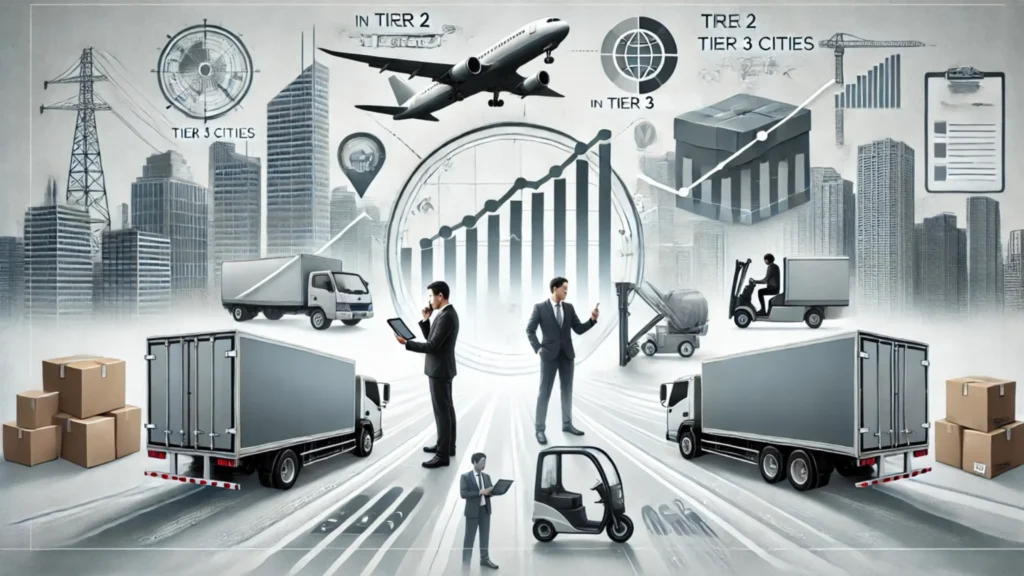
The e-commerce revolution has transformed the retail landscape, connecting buyers and sellers across geographies. While Tier 1 cities dominated the initial phases of this transformation, Tier 2 and Tier 3 cities are now the epicenters of growth. These cities, often characterized by underserved markets and burgeoning consumer aspirations, are now major contributors to the e-commerce boom. Tier 2 and Tier 3 cities accounted for 60% of India’s overall e-commerce demand in 2023, with a projected annual growth rate of 30% by 2025. This unprecedented growth is not just reshaping retail but is also creating jobs, fostering entrepreneurship, and driving inclusive economic growth. This blog delves deep into how e-commerce is unlocking prosperity in Tier 2 and Tier 3 cities with case studies and research-backed insights. The Emergence of Tier 2 and Tier 3 Cities in E-commerce The Growing Digital Ecosystem The digital infrastructure in smaller cities has improved significantly, fueling e-commerce growth: Affordable Internet Access: Reliance Jio’s entry into the Indian market slashed data prices, increasing internet penetration from 20% in 2016 to 50% in 2023 in rural areas. As per the latest Annual Report, its share of data traffic in India rose to about 60% in FY24. Smartphone Adoption: According to a Counterpoint Research report, over 70% of smartphone sales in India now occur in Tier 2 and Tier 3 cities. Digital Payments Growth: The e-commerce industry in India is growing on levers such as increased smartphone penetration, increased affluence and low data prices, providing impetus for e-retail growth. With over 950 Mn users, India is the 2nd largest internet market in the world with 131.16 Lakh Cr UPI transactions in FY 2023-24. Platforms like Paytm, UPI, and Google Pay have enabled seamless transactions in these regions, with over 40 billion UPI transactions recorded in 2023. As per the PIB Report, Digital payment transactions volume grew to 18,737 crore in FY 2023-24 from 2,071 crore in FY 2017-18 at Compounded Annual Growth Rate (CAGR) of 44%; with value of transactions at ₹3,659 lakh crore in FY23-24 from ₹1,962 lakh crore in FY17-18 at CAGR of 11%. UPI transactions volume grew to 13,116 crore in FY 2023-24 from 92 crore in FY 2017-18 at CAGR of 129%; with value of UPI transactions reaching ₹200 lakh crore in FY23-24 from ₹1 lakh crore in FY17-18 at CAGR of 138%. UPI now seamlessly facilitates live transactions in 7 countries, including key markets such as UAE, Singapore, Bhutan, Nepal, Sri Lanka, France, and Mauritius Case Study I: Flipkart’s Localization Strategy Flipkart localized its app interface in 11 regional languages, including Hindi and Tamil, to cater to diverse audiences. This initiative contributed to a 2x increase in new users from Tier 2 and Tier 3 cities during their 2022 Big Billion Days sale. Case Study II: Amazon India’s Expansion Amazon India has strategically expanded its operations to cater to the burgeoning demand in Tier 2 and Tier 3 cities. The company has established numerous fulfillment centers and delivery stations in these regions, enhancing its logistics network. This expansion has not only improved delivery times but also created employment opportunities for local populations. Amazon’s initiatives have empowered small and medium-sized businesses (SMBs) in these cities to reach a broader customer base, thereby stimulating local economies. Case Study III: Flipkart’s Kirana Program Flipkart’s Kirana Program exemplifies the integration of local businesses into the e-commerce ecosystem. By partnering with local kirana (grocery) stores for last-mile deliveries, Flipkart has enhanced its delivery network while providing additional income streams for these small businesses. This initiative has been particularly successful in Tier 2 and Tier 3 cities, where local stores play a crucial role in the community. E-commerce as a Catalyst for Job Creation 2.1 Direct Employment in Logistics and Warehousing The logistics sector has seen exponential growth in smaller cities: Amazon India: With over 60 fulfilment centers across the country, Amazon has created thousands of jobs in towns like Ludhiana and Guwahati. Their “I Have Space” initiative partners with over 28,000 small businesses for last-mile delivery. Amazon has announced to invest additional $15 billion in India by 2030. Flipkart’s Delivery Network: Flipkart employs over 1 lakh delivery personnel, with a significant portion operating in Tier 2 and Tier 3 towns. Social media platforms like Instagram: A major chunk of the ecommerce industry is now dependent on social media platforms like Instagram, facebook marketplace. 60-70% of Instagram users report following or researching brands and products on the app. Festival offers: The E-commerce websites flood with discount and various other lucrative offers at the time of various festivals worldwide like Independence Day, Diwali, Christmas, New Year, Black Friday etc. Market Access and Expansion: E-commerce provides businesses in smaller cities unprecedented market access. Local enterprises, previously confined to regional markets, can now showcase their products to a national and even global audience. This expanded reach fosters growth opportunities and enables businesses to scale beyond traditional boundaries. Case Study: Zomato’s Entry into Tier 3 Markets In 2023, Zomato expanded operations to Tier 3 cities like Udaipur and Ajmer. Their data shows that 45% of their delivery partners in these regions transitioned from agriculture, creating stable income opportunities. 2.2 Empowering Entrepreneurs Platforms like Amazon, Flipkart, and Meesho are empowering small and medium-sized enterprises (SMEs): Amazon Karigar: This initiative promotes regional products like Pashmina shawls from Kashmir and Madhubani paintings from Bihar. Meesho’s Seller Base: Over 65% of Meesho’s 15 million sellers come from Tier 2 and Tier 3 cities, with many reporting a 30% increase in income. Boosting Women Entrepreneurs E-commerce industry is even providing women with opportunities to achieve financial independence. A homemaker can start reselling sarees earning ₹50,000 per month without any upfront investment. Rural women artisans, such as those making Pattachitra paintings in Odisha, are now reaching international audiences. Economic Empowerment Through E-commerce According to recent industry calculations, Turkey will rank first among 20 countries worldwide in retail e-commerce development between 2024 and 2029, with a compound annual growth rate of 11.6 percent. The Turkish e-commerce market is currently valued
Will New Labour Codes Secure Wages and Social Security for 50 Crore Workers, Including Gig and Platform Workers?

The landmark decision to consolidate 29 laws into four codes is a historic step toward providing women with not only job security but also respect, health, and various welfare measures. Through these labor reforms, there is a clear commitment to creating an environment that prioritizes the well-being of women in the workforce. Additionally, these changes are expected to significantly enhance the ease of doing business in the country, streamlining regulations and fostering a more conducive environment for both employers and employees. This forward-looking approach not only supports gender equality but also contributes to the overall economic development and business efficiency in the nation. In this comprehensive reform, the government seeks to ensure that all workers have a statutory right to receive minimum wages and timely wage payments, fostering a more equitable and prosperous labour environment. To reduce ambiguity and legal disputes, these codes introduce uniform and straightforward definitions of ‘wages’ across all four labour-related regulations. Furthermore, the introduction of annual health check-ups and medical facilities aims to improve the overall well-being of workers, enhancing productivity and extending life expectancy. These reforms also formalize the employment relationship by requiring the issuance of appointment letters to every employee, ultimately providing job security and enabling workers to claim statutory benefits such as minimum wages and social security. Additionally, the creation of a Re-skilling Fund demonstrates the government’s commitment to the skill development of workers, aligning with the changing demands of the job market. Furthermore, the codes recognize the importance of addressing the needs of gig workers and platform workers by defining them and paving the way for the formulation of social security schemes funded by aggregators and government sources. This inclusive approach extends the benefits of the Employees’ State Insurance Corporation and the Employees’ Provident Fund Organization to unorganized workers, gig workers, and platform workers, along with their families. The reforms also ensure that fixed-term employment (FTE) workers are entitled to the same benefits as permanent employees, promoting fairness and job security. Workers’ rights are further enhanced with provisions for annual leave with wages and the option to encash leave on demand, offering flexibility and financial security. Moreover, the expansion of the Employees’ Provident Fund to all industries, irrespective of their scheduling, underscores the government’s commitment to improving social security and labour welfare across various sectors. In sum, these labour codes represent a transformative and forward-looking effort to foster a more inclusive, secure, and prosperous work environment for all workers in India. The four Labour Codes aim to enhance worker protection, including those in the unorganized sector, by ensuring statutory minimum wages, social security, and healthcare. Some significant provisions of these Codes include: Establishing a statutory right for all workers to receive minimum wages and timely wage payments to support sustainable development and inclusivity. Introducing a consistent and easily enforceable definition of ‘wages’ across all four Labour Codes to prevent multiple interpretations and legal disputes. Providing annual health check-ups and medical facilities to enhance worker productivity and increase life expectancy. Requiring the issuance of appointment letters to every employee, formalizing employment contracts, increasing job security, and enabling workers to claim statutory benefits such as minimum wages and social security. Establishing a Re-skilling Fund for worker skill development. Defining gig workers and platform workers to create social security schemes, funded by aggregators and other sources, with contributions from both the Central and State Governments. Allowing the Central Government to extend benefits to unorganized workers, gig workers, platform workers, and their families through the Employees’ State Insurance Corporation and the Employees’ Provident Fund Organization. Granting fixed-term employment (FTE) workers entitlement to the same benefits available to permanent employees, including gratuity after one year of service. Ensuring that every worker is entitled to annual leave with wages after working for 180 days, compared to the current requirement of 240 days. Additionally, there is a provision for leave encashment on the worker’s request while in service at the end of the calendar year. Expanding the applicability of the Employees’ Provident Fund to all industries, as opposed to only scheduled industries as it stands presently. Major Achievements of New Labour Codes are as follows – As of December 2023, the Shram Suvidha Portal has successfully generated 4,268,334 Labour Identification Numbers (LIN). Furthermore, inspection reports for 821,283 cases have been uploaded onto the portal, reflecting the ongoing efforts to monitor and manage labor-related activities. The eSHRAM portal has been established with the aim of building a National Database of Unorganized Workers, incorporating Aadhaar details to facilitate the provision of social security benefits. Eligibility for registration on the eSHRAM portal is open to any worker operating in the unorganized sector with an age ranging from 16 to 59. This database encompasses a diverse range of workers, including migrant workers, construction workers, gig workers, platform workers, and more. As of December 2023, a noteworthy achievement has been reached, with a total of 29,23,93,908 e-cards issued through the portal, marking a significant step in the coverage and support for unorganized workers across the nation. As of October 2023, the All India Consumer Price Index Number for Industrial Workers (CPI-IW) has experienced a rise of 0.9 points, reaching a value of 138.4 (one hundred thirty-eight point four). In terms of the one-month percentage change, there has been a 0.65% increase compared to the previous month. This is in contrast to the 0.91% increase recorded during the corresponding months of the previous year. These figures provide insights into the fluctuations in the cost of living and inflationary trends affecting industrial workers in India. As part of the Nidhi Aapke Nikat 2.0 initiative, the Employees’ Provident Fund Organization (EPFO) extended its outreach to stakeholders across all districts of the country. The monthly ‘Nidhi Aapke Nikat’ program held on April 27th, 2023, covered 666 districts with 27,592 participants. The focus was on addressing grievances, resulting in 12,437 reported issues, of which 9,816 were successfully resolved. This effort underscores EPFO’s commitment to increasing accessibility, visibility, and resolving concerns for its stakeholders nationwide. As part of the
Overseas Direct Investment: Comprehensive Study on the most Critical Investment Route

Chandrayaan 3: India’s Leap towards Lunar Excellence

Humanity’s fascination with the Moon has spanned centuries, from ancient myths to the modern era of space exploration. In this exciting journey, India has emerged as a prominent player with its Chandrayaan series of missions. Among these, Chandrayaan-3 shines as a beacon of scientific and technological advancement, promising to extend our understanding of the Moon and beyond. In the realm of space exploration, India continues to make remarkable strides with its ambitious space missions. Among these endeavors, the Chandrayaan series stands out as a testament to India’s scientific prowess and its dedication to unraveling the mysteries of the cosmos. The Chandrayaan-3 is the country’s ongoing lunar mission that promises to further expand our understanding of the Moon and space exploration as a whole. Unveiling the Chandrayaan Saga The Chandrayaan series is a testament to India’s space agency, the Indian Space Research Organisation (ISRO), and its dedication to unraveling the mysteries of the cosmos. Beginning with Chandrayaan-1 in 2008, the series marked a significant milestone for India, as it discovered evidence of water molecules on the lunar surface. This groundbreaking revelation challenged existing theories about the Moon’s history and potential as a stepping stone for future space exploration. On October 22, 2008, India’s inaugural lunar mission, Chandrayaan-1, achieved a successful launch from SDSC SHAR, Sriharikota. The spacecraft effectively maintained an orbit around the Moon, maintaining a distance of 100 km above the lunar surface. Its primary mission involved conducting chemical, mineralogical, and photo-geologic mapping of the Moon. To achieve this, the spacecraft was equipped with a total of 11 scientific instruments, developed collaboratively by experts from India, the USA, UK, Germany, Sweden, and Bulgaria. Building on the success of Chandrayaan-1, ISRO launched Chandrayaan-2 in 2019. The Chandrayaan-2 mission stands as a notably intricate endeavor, signifying a substantial technological advancement in comparison to previous ISRO missions. It encompassed three integral components: an Orbiter, a Lander, and a Rover, all aimed at investigating the uncharted South Pole of the Moon. This mission’s core objective involves enriching lunar scientific understanding by conducting comprehensive examinations of various aspects, including topography, seismography, mineral distribution and identification, surface chemical composition, thermal characteristics of the uppermost soil layer, and the composition of the delicate lunar atmosphere. What sets this mission apart is its comprehensive scope, aiming to study not only specific lunar regions but also encompassing the exosphere, surface, and sub-surface areas in a unified mission. Currently, ISRO has launched Chandrayaan-3 on July 14, 2023, at 14:35 Hrs. IST from the Second Launch Pad, SDSC-SHAR, Sriharikota. As on August 20th 2023, the Lander Module is currently positioned in a orbit of 25 km x 134 km. The anticipated commencement of the powered descent is scheduled for August 23, 2023, at approximately 1745 Hrs. IST. Detailed Overview of Chandrayaan-3 Chandrayaan-3 serves as a subsequent mission to Chandrayaan-2, aiming to showcase a comprehensive capacity for secure lunar surface landing and subsequent rover movement. This mission comprises both Lander and Rover components and launched using LVM3 from SDSC SHAR, Sriharikota. The propulsion module’s role encompasses transporting the Lander and Rover configuration until they reach a lunar orbit of 100 km. Notably, the propulsion module is equipped with the Spectro-polarimetry of Habitable Planet Earth (SHAPE) payload, designed to conduct spectral and polarimetric measurements of Earth while situated in lunar orbit. Lander Payloads: The Lander is equipped with various scientific instruments, including Chandra’s Surface Thermophysical Experiment (ChaSTE), which serves to measure both the thermal conductivity and temperature. Another important addition is the Instrument for Lunar Seismic Activity (ILSA), responsible for assessing seismic activity in the vicinity of the landing site. Additionally, the Langmuir Probe (LP) is integrated into the Lander’s payload suite to effectively estimate plasma density and its fluctuations. An interesting inclusion is the passive Laser Retroreflector Array provided by NASA, strategically incorporated to facilitate lunar laser ranging studies. Rover Payloads: The Rover, on the other hand, carries distinctive scientific tools, such as the Alpha Particle X-ray Spectrometer (APXS) and the Laser Induced Breakdown Spectroscope (LIBS). These instruments play a crucial role in analyzing the elemental composition of the terrain surrounding the landing site. Comprising an indigenous Lander module (LM), Propulsion module (PM), and a Rover, Chandrayaan-3 is driven by the objective of developing and showcasing novel technologies essential for interplanetary missions. A pivotal capability of the Lander is its aptitude for executing a gentle landing at a designated lunar location. Subsequently, the Rover will be deployed to conduct on-site chemical analyses of the lunar surface as it navigates its path. Both the Lander and the Rover house scientific payloads tailored for conducting experiments on the lunar terrain. Operating from the launch vehicle injection to the final lunar orbit at a 100 km circular polar distance, the Propulsion Module (PM) plays a vital role in transporting the Lander (LM) and then detaching it upon arrival. Adding to its significance, the Propulsion Module features an additional scientific payload, enhancing its value by facilitating experiments post-separation of the Lander Module. The GSLV-Mk3 has been selected as the designated launcher for Chandrayaan-3. This launch vehicle will position the integrated module into an Elliptic Parking Orbit (EPO), characterized by dimensions approximately 170 km x 36,500 km. Chandrayaan-3’s mission encompasses the following key objectives: Demonstration of Safe and Soft Lunar Landing: This involves showcasing the ability to safely land on the lunar surface with precision. Rover Mobility on the Moon: Chandrayaan-3 aims to demonstrate the maneuvering capabilities of a rover on the lunar terrain. In-Situ Scientific Experiments: The mission seeks to conduct scientific analyses directly on the lunar surface. To fulfill these objectives, Chandrayaan-3 incorporates a range of advanced technologies within its Lander module: Altimeters: Cutting-edge altimeter systems, including Laser and RF-based technologies, are employed for precise altitude measurements. Velocimeters: The mission utilizes Laser Doppler Velocimeter and Lander Horizontal Velocity Camera systems to measure and analyze velocities. Inertial Measurement: Laser Gyro-based Inertial referencing and Accelerometer packages contribute to accurate measurements and references. Propulsion System: An advanced propulsion setup consists of 800N Throttleable Liquid Engines, 58N attitude
Cyber Security – An Insurance From Cyberattacks or Crimes

Introduction of Cyber Security On the internet, data or information is widely spread and with each year, technology is becoming more comprehensive and complicated, and so do cyberattacks. Digital crime is also enhancing with great intensity and certainly, it is not restricted to any specific Internet-accessible platforms. Different devices such as desktops, smartphones, and tablets each might carry a particular level of digital defense, yet each device contains certain vulnerabilities which provide a pathway for hackers to attune to the devices. On the positive side, particular digital security tools and services operate parallel to these negative tech counterparts. In this section, we will emphasize on the introduction of cyber security and other associated concepts of the same. Cyber security refers to the set of techniques that are used to conserve the integrity of networks, programs, and data from attack, damage, or unauthorized access. Information technology includes a broader category that preserves all information assets, be it in hard copy or digital form. The term cyber security is not restricted to computers, but it is also implemented to the varied inter-connected systems such as computers, servers, mobile devices, electronic systems, networks, or data. The digital safety tool is tremendously flexible and possessed by distinct industries and of various designs or types. Various devices such as navigation apps, game apps, and social apps always have access to the internet, like our desktops, mobile phones, tablets, laptops, and others. Similar to that, even if you are pursuing a store or listening to music, there is a probability that you are engaging in the environment utilizing the necessities of cybersecurity’s modern definitions. Contemporary, cyber security jobs contain the digital defense of information or data. Typically, it includes information storage protection, identification of intrusion, and response to cyber-attacks that seek to steal personal information. The scope of cyber security is huge and the niche of cyber security to digitally instantly raises concern. In India, cyber crimes are covered by the Information Technology Act, 2000, and Indian Penal Code, 1860 to prevent cyber crimes. The primary one takes care of issues associated with cyber crimes and electronic commerce, while the latter one, provides an outline and definition, including punishments, which we will discuss later in the blog. It is to be noted that, cybersecurity encompasses – 1. Network Security Primarily, cyber security emphasizes on data storage and transfer, while the network is much broader. As its name defines it, in general, network security includes the defense, maintenance, and recovery of networks. It contains cyber security as a defensive way to protect all network users from digital threats, even if a provided cyber attacker pertains more purposes than mere conservation of data exploitation. With the objective to conserve the integrity, safety, and sustainability of network users, the professionals operating the same must emphasize on securing connection privacy to prevent cyber security. The network security services also include anti-virus software, malware detection tools, firewall upgrades, virtual private networks (VPNs), and other security programs. As mentioned, the terms cyber security and network security are often used interchangeably, which often cover similar bases and deviate at intersections where data storage and data tracking need to overlap. 2. Information Security Several commercial workplaces use synchronized facets of day-by-day operations. It handles user login, schedule management tools, project software, and telecommunication, among others. It conserves sensitive information from unpermitted activities containing inspection, modification, recording, and other disruption or destruction. The objective of information technology is to ensure the safety and privacy of significant data such as details of a customer account, financial data, or intellectual property. 3. Operational Security Operational security is also known as procedural security, which is referred to as a risk of managing processes to view the activity from the perspective of an adversary with the objective to conserve sensitive information from attackers. It includes the below-mentioned steps, as follows – What Are the Different Types of Cybersecurity? In this section, we will highlight the different types of cyber security. Cyber security pertains to a wide field possessing distinct disciplines, which mainly can be characterized as follows – a. Network Security Major cyberattacks take place over a network and in order to ensure network security, network security solutions need to be utilized which are designed primarily to identify and block such attacks. Moreover, these solutions include data and access controls like Data Loss Prevention (DLP), IAM (Identity Access Management), NAC (Network Access Control), and NGFW (Next-Generation Firewall) application controls with the motto to enforce safe web use policies. Besides this, in order to ensure multi-layered network protection, advanced technologies such as IPS (Intrusion Prevention System), NGAV (Next-Gen Antivirus), Sandboxing, and CDR (Content Disarm and Reconstruction) are utilized. However, this won’t be enough to prevent such attacks, therefore, network analytics, threat hunting, and automated Security Orchestration and Response (SOAR) must be used. b. Cloud Security Multi-National Companies (MNCs), large organizations, firms, and even startups are constantly adopting cloud computing, which makes cloud security a major priority considering that it engages in data storage, software information, networking, analytics, and intelligence over the internet with the sole objective to provide instant innovation, flexible resources and economies of scale. Considering the threat to cloud security could result in a breach of security, therefore, it is significant to obtain a cloud security strategy containing cyber security solutions, controls, policies, and services that allow you to protect the entire cloud deployment against such attacks. c. IoT Security The full form of IoT is, the “Internet of Things”, which offers several productivity benefits to an organization, however, the same device tends to introduce the same organization to potential cyber security threats which result in breaches of vulnerable devices inadvertently connected to the internet. IoT security preserves devices from discovering and classification of connected devices, including automatic segmentation to administer network activities and utilizing IPS as a patch (virtual) in order to restrict the exploitation of vulnerable IoT devices. a. Application Security Like any other activities mentioned here, web applications are also connected to the internet which again
Digital Rupee: The Future of Digital Currency