
Indian Railways 2.0 – Diversifying Investment in Indian Railway Ecosystems
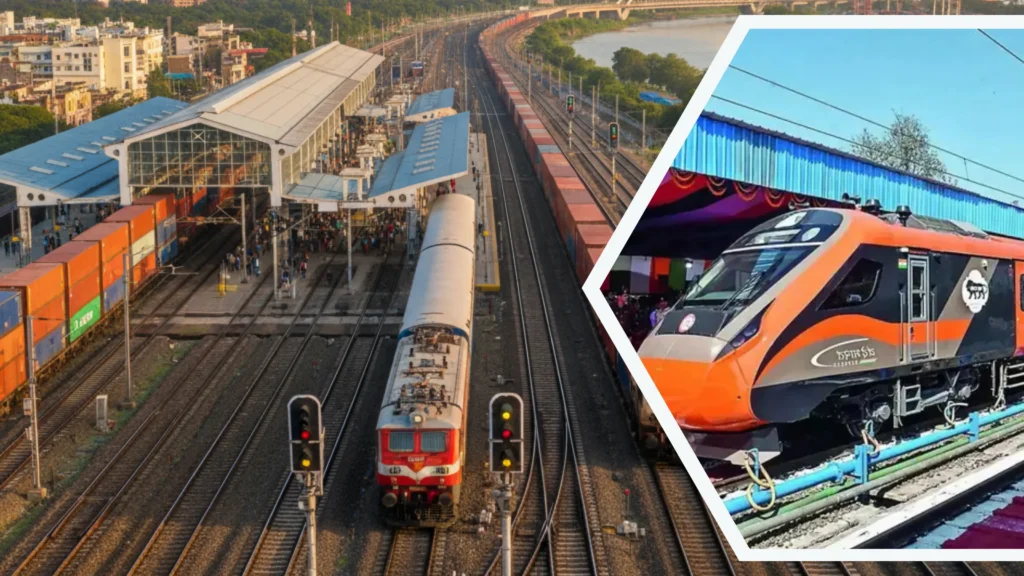
India’s growth story is intricately linked to the development of its infrastructure, with transportation playing a pivotal role in driving economic progress. As the world’s fastest-growing major economy, India is poised to see its GDP soar, and a robust, efficient transportation network is essential to sustaining this momentum. As the backbone of India’s transportation system, Indian Railways plays a vital role in connecting the country, facilitating trade, and driving economic growth. However, in an era of rapidly changing market dynamics, railways need to diversify their revenue streams beyond traditional fare and freight incomes. The Government of India, through the National Rail Plan (NRP) for 2030, envisions a future-ready railway system that will significantly enhance operational capacity, sustainability, and efficiency. This plan aims to increase the modal share of railways in freight to 45% by 2030, ensuring that the rail network is prepared for future demand up to 2050. Financial Performance of Indian Railways: Current Figures Indian Railways continues to be a vital component of India’s transportation infrastructure, demonstrating growth in both passenger and freight sectors. In the fiscal year 2024-25, internal revenues are estimated at ₹2,78,500 crore, marking an 8% increase over the previous year’s revised estimates. Traffic revenue contributes ₹2,78,100 crore, with 65% from freight services (₹1,80,000 crore) and 29% from passenger services (₹80,000 crore). The remaining 6% of the total traffic revenue (which amounts to ₹16,400 crore) can be attributed to various other revenue sources for Indian Railways. These include station and catering services, advertising rights, and other incidental services. Looking ahead, Indian Railways projects revenues exceeding ₹3 lakh crore in the fiscal year 2025-26, an approximate 8% rise from 2024-25. Passenger revenue is expected to grow by 16% to ₹92,800 crore, while freight revenue anticipates a 4.4% increase to ₹1,88,000 crore. From April to December 2024, Indian Railways generated ₹1,93,000 crore in revenue, a 4% year-on-year growth. This includes ₹1,26,000 crore from freight and ₹55,988 crore from passenger services. Capital expenditure for the same period was ₹1,92,000 crore, reflecting a 2% increase over the previous year. Government’s Vision for the Future of Indian Railways With a clear focus on enhancing operational capacities and leveraging commercial policy initiatives, the plan aims to drive growth, improve service delivery, and increase the role of railways in India’s economic development. Key Government Vision Points: The government aims to increase railways’ freight share to 45% by 2030 through strategic operational improvements and commercial policies. A target to increase freight train speeds to 60-70 km/h to significantly reduce transit times and enhance logistics efficiency. 100% electrification of the railway network, supporting sustainability and green energy initiatives to reduce carbon footprints. Identifying new dedicated freight and high-speed rail corridors to meet the rising demand for fast and efficient transportation. Addressing the rolling stock and locomotive requirements for both freight and passenger services, ensuring readiness for future demand. Encourages private sector involvement in operations, infrastructure development, and rolling stock management to drive efficiency, investment, and innovation. Capital investment plan to support these goals, ensuring funding is allocated for long-term infrastructure development and modernisation projects. Government’s Vision vs Current Growth in Indian Railways (as of April 2025) Vision Area Government Target Current Progress (as of April 2025) Freight Modal Share Increase to 45% by 2030 Currently at 27% Freight Train Speed Increase to 60–70 km/h Average speed increased from 22 km/h to 50 km/h Electrification 100% of broad-gauge network 97% electrified Dedicated Freight Corridors (DFCs) Complete Eastern and Western DFCs; plan new corridors Eastern DFC fully operational; ~80% of Western DFC commissioned; plans for additional corridors underway Rolling Stock Modernization Expand and upgrade fleet 500 WAG-12B locomotives in service; 1,200 WAG-00 locomotives ordered from Siemens Private Sector Participation Encourage in operations and infrastructure Initiatives include Gati Shakti Cargo Terminals and policies for private investment in rolling stock Capital Investment ₹2.65 trillion allocated for FY 2024–25 ₹1.92 trillion spent by January 2025, focusing on safety and rolling stock Roadblocks to Indian Railways’ Vision 2030 While the government’s vision for Indian Railways is promising, some challenges could impact its ability to fully meet future demands. The goal of capturing 45% of the freight market by 2030 is ambitious, but as global trade and logistics needs evolve, more than just operational improvements will be required. (Figures in hectares) Zonal Railway Total railway Land Total railway land leased/licensed Central 31,476 168 Eastern 21,082 469 East Central 33,644 2,437 East Coast 23,010 273 Northern 46,447 474 North Central 21,149 220 North Eastern 25,899 326 Northeast Frontier 48,469 1,214 North Western 27,555 87 Southern 26,953 365 South Central 40,600 237 South Eastern 34,877 970 South East Central 23,085 368 South Western 19,893 197 Western 38,275 620 West Central 23,656 183 Metro 152 0.42 Production Units 3,989 204 Total 490,211 8,812.42 Indian Railways holds a substantial land portfolio totaling 490,211 hectares across the country. Of this, only 8,812.42 hectares, accounting for merely 1.80%, have been leased or licensed for various purposes. This significant disparity indicates a considerable scope for enhanced land utilization. Effectively managing this extensive land portfolio presents significant challenges, including addressing encroachments, streamlining land acquisition processes, and developing strategic plans for optimal land use to support future railway expansions and modernization efforts. Lastly, while the capital investment plan is a critical part of the vision, an agile approach to funding will be essential to accommodate technological advances and global shifts. Therefore, Indian Railways must adopt a flexible strategy that integrates cutting-edge technology and adaptive investment models to address the dynamic needs of the future. Non-Fare